
Optimal Space Allocation for Solar Panel Installation
May 11, 2026
Solar Engineering · Site Optimization
Optimal Space Allocation for Solar Panel Installation
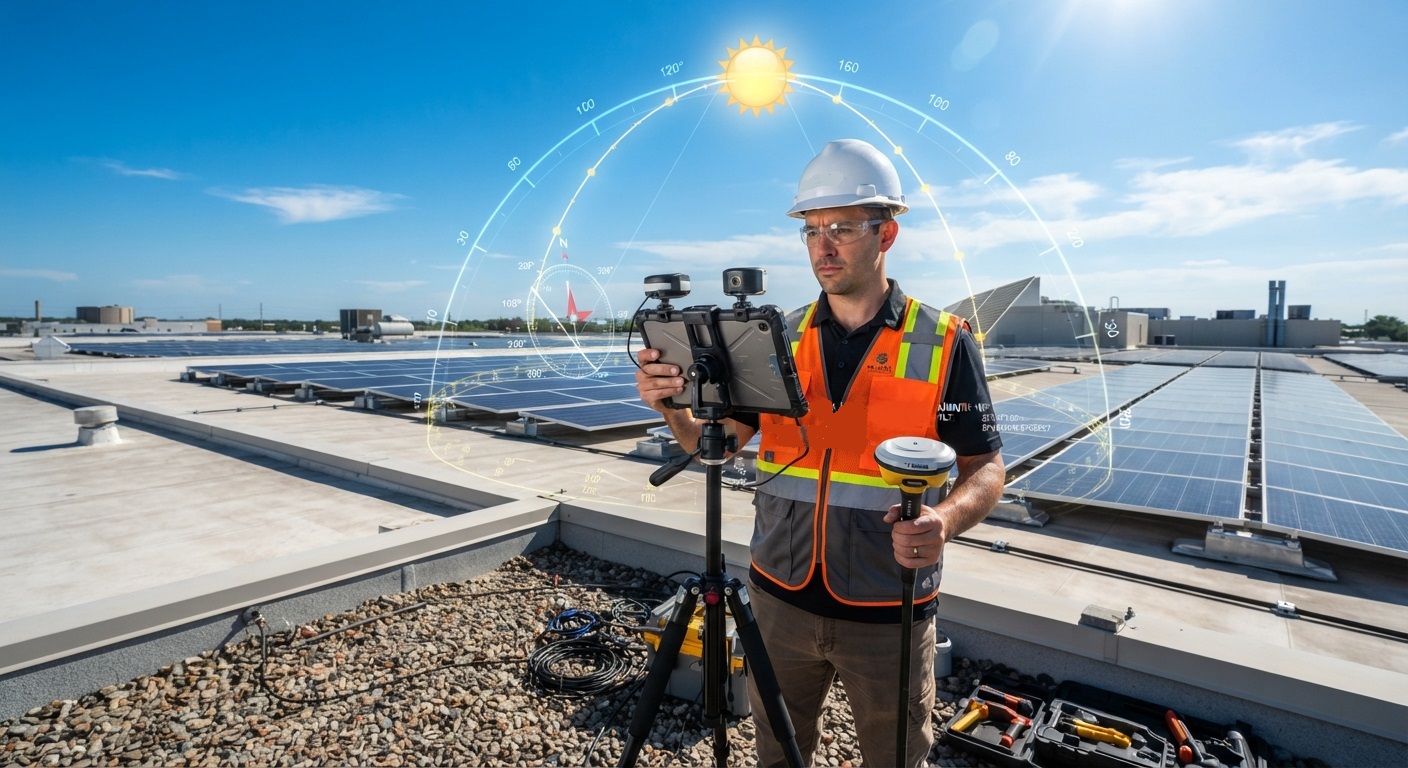
Allocating the optimal space for photovoltaic (PV) system installation requires a multidisciplinary assessment of geographical, structural, environmental, operational, and economic parameters in order to maximize energy yield, improve system reliability, and minimize levelized cost of electricity (LCOE) while achieving the shortest possible payback period (ROI).
3D Shading Analysis
Structural Verification
Thermal & Ventilation
Economic Simulation
Recent literature and technical guidance up to 2026 indicate that optimal PV site selection can no longer be based only on solar irradiance and tilt angle. Instead, it must integrate 3D site geometry, shading dynamics, structural loading, albedo effects, thermal behavior, accessibility, O&M planning, and grid proximity — especially for rooftop PV, ground-mounted PV, bifacial systems, floating PV, and agrivoltaic applications.
Geographic Foundation
Geographic Position, Orientation & Shading Analysis
Array orientation and shading are two of the most decisive factors in annual energy output.
1
Geographic Position and Orientation
For fixed-tilt systems in the Northern Hemisphere, including Iran, the PV array should generally face true south to capture the highest annual solar exposure. However, modern studies show that the optimal azimuth may vary depending on load profile, self-consumption objectives, bifacial configuration, roof geometry, local climate, and utility tariff structure.
- Optimal tilt is derived from site-specific simulation, not a fixed latitude value
- Tools: PVsyst, HelioScope, and GIS-based solar mapping
- Consider annual irradiance, seasonal demand, wind loading, and snow shedding
- For Iran, a conventional fixed-tilt range of 25°–35° is a practical starting point
2
Shading and 3D Obstruction Analysis
Shading remains one of the most critical sources of PV energy loss. Even partial shading on a small portion of the array can trigger mismatch losses, bypass diode activation, and hotspot formation, reducing both power output and module lifespan.
- 3D roof modeling, LiDAR-based surveys, and GIS viewshed analysis
- Solar path simulation across seasonal extremes
- Evaluate parapets, chimneys, ducts, trees, poles, and nearby structures
- Optimize inter-row spacing against early-morning, noon, and winter self-shading
Structural & Thermal Feasibility
Structural Capacity & Thermal Management
Mechanical integrity and heat behavior determine long-term reliability and yield.
3
Structural Capacity and Mounting Feasibility
Structural feasibility is now recognized as a primary siting criterion, not a secondary one. Roofs and supporting structures must resist dead load, live load, wind uplift, snow loads, and, where relevant, seismic effects.
- Wind loading is often the dominant structural risk for rooftop systems
- Balance snow retention and snow shedding through tilt selection
- Ground-mounted plants require geotechnical evaluation
- Assess soil bearing capacity, settlement, corrosion, drainage, and foundation suitability
4
Thermal Behavior, Cooling, and Ventilation
PV module efficiency decreases as cell temperature rises. The selected space should therefore allow adequate rear-side ventilation and natural airflow beneath modules to reduce heat accumulation.
- Especially important for low-clearance rooftops and bifacial systems
- Critical in high-irradiance regions and hot climates such as much of Iran
- Consider urban heat island effect and roof reflectance
- Combine climate data, surface temperature, and airflow in yield simulation
Operations & Integration
Soiling, Access & Grid Proximity
Long-term yield depends on maintenance readiness and efficient electrical integration.
5
Soiling, Cleaning, and Operational Access
Soiling has become a major performance factor in dusty and arid regions. Dust accumulation, industrial pollution, salt, bird droppings, and seasonal debris can significantly reduce output if cleaning is not properly planned.
- Safe access routes and walkways for inspection and cleaning
- Sufficient clearance around module strings and equipment
- Practical access to inverters, combiner boxes, and disconnects
- Integrate maintenance planning at the design stage
6
Electrical Proximity and Grid Integration
The installation site should be as close as possible to the inverter, AC distribution board, and grid interconnection point to reduce DC cable losses, voltage drop, installation cost, and electrical complexity.
- Minimizing DC and AC cable lengths
- Reducing voltage drop and electrical losses
- Providing accessible routes for inspection and maintenance
- Coordinating inverter, combiner box, and switchgear locations
- Protecting cables against mechanical damage and environmental exposure
- Fuel storage areas
- Flammable materials and hazardous zones
- Lightning protection systems
- Emergency access routes
- Firefighting and emergency-response pathways
- Ground or rooftop albedo
- Module mounting height
- Row spacing and rear-side visibility
- Rear-side shading conditions
- Reflected irradiance across the installation area
- Soil type and ground texture
- Roof material and surface finish
- Moisture and rainfall conditions
- Snow cover and seasonal vegetation
- Surface coating, color, and reflectivity
- PVsyst for detailed energy-yield simulation
- HelioScope for layout development and optimization
- Meteonorm for weather and irradiance data
- GIS and remote sensing for site screening
- LiDAR and 3D mapping for rooftop and terrain geometry
- Solar forecasting under variable weather conditions
- Performance prediction and anomaly detection
- Soiling and shading impact estimation
- Energy-output forecasting and operational optimization
- Improved decision-making through data-driven analysis
- Capital expenditure and installation cost
- Operating and maintenance cost
- Structural feasibility and site preparation needs
- Cleaning requirements and water availability
- Downtime risk and maintenance accessibility
- Expected annual energy yield
- System availability and reliability
- Electrical losses and grid-connection constraints
- Payback period and return on investment
- Expansion potential and strategic project value
- Solar-resource and irradiation analysis
- 3D shading and obstacle assessment
- Structural and geotechnical verification
- Thermal management and ventilation analysis
- Operation and maintenance accessibility
- Electrical proximity and routing optimization
- Albedo and bifacial PV performance evaluation
- Lifecycle cost and economic simulation
- PVsyst-based production and loss modeling
- HelioScope layout and design validation
- GIS-based location and infrastructure analysis
- LiDAR and 3D geometry assessment
- Technical, financial, and operational risk evaluation
Stage 06
Electrical Routing, Safety & Fire-Code Compliance
Efficient electrical routing must be integrated with safety requirements, fire protection measures, maintenance access, and applicable local regulations.
11
Electrical Routing Optimization
Cable routing, inverter placement, combiner-box locations, and connection pathways should be planned to minimize electrical losses, simplify maintenance, and reduce installation complexity.
12
Safety Separation Requirements
Optimal electrical routing must also comply with safety and fire-code requirements. Separation distances should be defined according to applicable local electrical, construction, and fire regulations.
Stage 07
Albedo & Bifacial PV Considerations
Bifacial PV systems introduce additional design variables because rear-side energy production depends directly on reflected irradiance and the characteristics of the installation surface.
13
Bifacial Performance Factors
The output of bifacial modules depends not only on front-side solar exposure but also on the amount of irradiance reflected from the ground or roof surface toward the rear side of the module.
14
Dynamic Albedo Assessment
Research published during 2024–2025 confirms that albedo is not a fixed constant. It changes with environmental conditions, surface characteristics, and seasonal variations.
Engineering Impact: The optimal tilt angle for bifacial modules may differ substantially from monofacial PV systems. In some projects, increasing surface reflectance can shift the optimum tilt angle and improve total system performance by increasing rear-side energy contribution.
Stage 08
Use of Simulation & AI-Based Tools
Modern PV site optimization increasingly relies on digital simulation, geospatial analysis, high-resolution site data, and AI-assisted forecasting.
15
Engineering & Site Simulation Tools
Engineering tools enable detailed analysis of solar yield, layout geometry, weather conditions, terrain constraints, and project-specific performance factors.
16
AI/ML-Enhanced Workflows
By 2026, advanced workflows increasingly combine physics-based simulation with AI and machine-learning methods, particularly for distributed PV, rooftop systems, and hybrid energy management.
Stage 09
Economic & Strategic Site Selection Criteria
The best PV site is not necessarily the location with the highest irradiance; it is the location that achieves the strongest overall technical and economic balance.
17
Techno-Economic Trade-Off
A successful site selection process must evaluate several interacting variables rather than relying on solar resource data alone.
18
Investment Performance
The final decision should be based on lifecycle performance, financial resilience, and long-term energy output rather than a single geometric or solar-resource parameter.
Engineering Conclusion
Practical Conclusion for PV Site Optimization
A reliable 2026 PV design methodology requires multi-criteria assessment rather than a single-parameter approach.
From a 2026 engineering perspective, finding the best space for solar panel installation requires a comprehensive, site-specific evaluation. The most reliable methodology combines solar resource analysis, three-dimensional shading studies, structural verification, thermal and ventilation analysis, O&M accessibility, electrical proximity, albedo and bifacial effects, and techno-economic simulation.
19
Integrated Assessment Framework
20
Recommended Decision Basis
For commercial and industrial PV projects, final site selection should be supported by site-specific modeling and a documented techno-economic evaluation framework.

Manage Consent
To provide the best experiences, we use technologies like cookies to store and/or access device information. Consenting to these technologies will allow us to process data such as browsing behavior or unique IDs on this site. Not consenting or withdrawing consent, may adversely affect certain features and functions.
Functional
Always active
The technical storage or access is strictly necessary for the legitimate purpose of enabling the use of a specific service explicitly requested by the subscriber or user, or for the sole purpose of carrying out the transmission of a communication over an electronic communications network.
Preferences
The technical storage or access is necessary for the legitimate purpose of storing preferences that are not requested by the subscriber or user.
Statistics
The technical storage or access that is used exclusively for statistical purposes.
The technical storage or access that is used exclusively for anonymous statistical purposes. Without a subpoena, voluntary compliance on the part of your Internet Service Provider, or additional records from a third party, information stored or retrieved for this purpose alone cannot usually be used to identify you.
Marketing
The technical storage or access is required to create user profiles to send advertising, or to track the user on a website or across several websites for similar marketing purposes.