
May 9, 2026
The Evolution of Heating and Cooling Systems in Project Execution
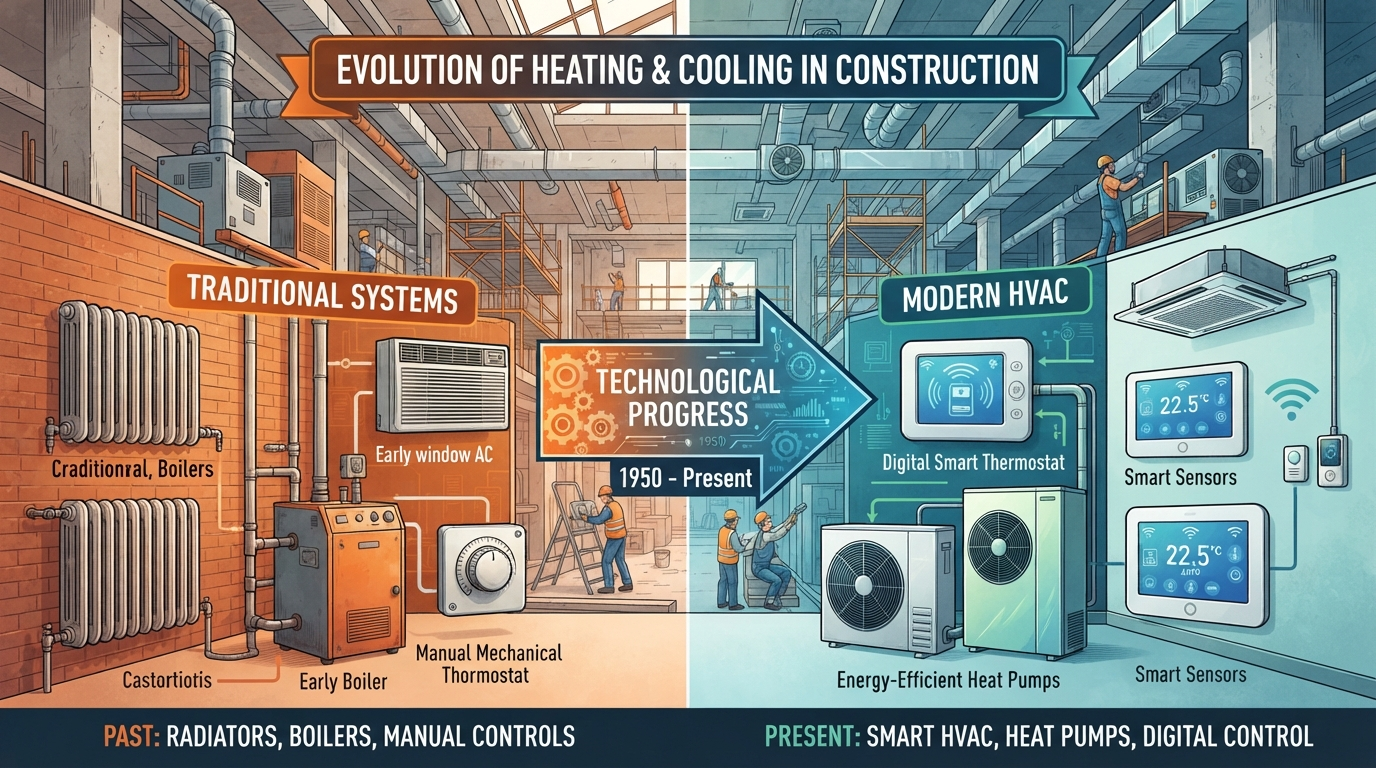
Heating and cooling systems are among the most critical components in the design and execution of construction, industrial, and power plant projects. With technological advancement, these systems have evolved from simple, high-consumption equipment into intelligent, energy-efficient, and environmentally sustainable solutions. This transformation has not only improved energy performance, but also played a major role in reducing operating costs and enhancing indoor environmental quality.
1. Traditional Heating and Cooling Systems
In the past, most projects relied on simple and centralized systems, including:
- Steam boilers and conventional boiler rooms for heating
- Evaporative coolers or early-stage chillers for cooling
- Basic distribution networks without precise temperature control
Although these systems were considered effective in their time, they had significant limitations such as high energy consumption, limited temperature control, and high maintenance costs.
2. The Introduction of Advanced Central Systems
With the growth of the construction industry and the increasing scale of projects, more advanced systems were introduced, including:
- Higher-efficiency compression and absorption chillers
- Modern boilers with digital control systems
- Air Handling Units (AHUs) and fan coil units for uniform temperature distribution
- Building Management Systems (BMS)
These technologies enabled more precise environmental control, lower energy consumption, and improved system reliability.
3. The Role of Smart Technologies in Next-Generation Systems
In modern projects, HVAC systems are increasingly moving toward intelligent automation. Some of the most important features of this new generation include:
- Automatic control of temperature and humidity based on occupancy
- Real-time performance monitoring of equipment to prevent unexpected failures
- Energy consumption data analysis for system optimization
- Integration with energy management systems and smart buildings
This approach allows systems to operate with minimum energy use and maximum efficiency.
4. Adoption of Sustainable Technologies and Renewable Energy
One of the most significant developments in the heating and cooling sector is the shift toward environmentally compatible technologies. New projects increasingly use systems that reduce fossil fuel consumption, including:
- High-efficiency heat pumps
- Solar heating systems
- Heat recovery systems
- Energy-optimized chillers
In addition to reducing greenhouse gas emissions, these technologies help lower long-term operating costs.
5. The Importance of Integrated Design in Projects
In large industrial and construction projects, the success of heating and cooling systems depends not only on equipment selection, but also on integrated design from the engineering stage through execution. This process includes:
- Analysis of the project’s heating and cooling loads
- Selection of equipment suited to climatic conditions
- Design of air or chilled/hot water distribution networks
- Coordination with electrical, architectural, and structural systems
