
May 10, 2026
Technical Standard Operating Procedure (SOP): Maintenance and Preservation of Warehouse Flooring and Racking Systems
Proper maintenance of flooring and racking systems in industrial and power plant projects is critical to ensuring operational safety, extending structural lifespan, and optimizing logistics efficiency. Warehouse floors are subjected to continuous wear and tear from static loads (racking systems) and dynamic loads (forklift traffic and heavy equipment).
The following technical requirements and maintenance protocols are established to ensure the structural integrity and longevity of warehouse facilities.
1. Load Management & Weight Distribution
Overloading is the primary cause of structural failure in warehouse floors and racking systems.
- Load Bearing Capacity (LBC) Determination: The maximum allowable weight per unit area (kg/m²) must be precisely calculated, validated, and clearly posted at visible locations throughout the facility.
- Uniform Distribution: Loads must be arranged to prevent excessive point loads on the concrete slab. The use of load-distribution plates under rack uprights is mandatory.
- Spacing Compliance: Standard spacing between racking rows must be strictly maintained to prevent stress concentration in any single section of the concrete slab.
2. Industrial Hygiene & Cleaning
Dust and particulate matter act as abrasive agents that degrade floor coatings over time.
- Daily Dry Cleaning: Utilization of industrial sweepers to collect solid particles and dust.
- Mechanical Wet Cleaning: Use of industrial floor scrubbers with pH-neutral detergents to remove oil, grease, and chemical contaminants.
- Immediate Spill Containment: Any chemical or oil leaks must be cleaned immediately to prevent penetration into the concrete matrix or degradation of epoxy/polyurethane coatings.
3. Protective Coating Maintenance
Warehouse floors are typically finished with high-performance hardeners or epoxy coatings.
- Prompt Repair: Upon identification of chipping, deep scratches, or coating delamination, patch repairs must be executed immediately to prevent damage from propagating to underlying layers.
- Top-Coat Rejuvenation: Depending on traffic intensity, the top-coat layer must be refreshed at scheduled intervals (typically every 3 to 5 years).
4. Expansion & Construction Joint Maintenance
Construction and expansion joints are the most vulnerable points on a warehouse floor when subjected to MHE wheel impact.
- Joint Filler Integrity: Joint fillers must be elastic yet shear-resistant. If fillers dry out, shrink, or become dislodged, they must be re-injected or replaced.
- Edge Spalling Repair: Chipping or spalling at joint edges leads to equipment vibration and wheel damage; these areas must be repaired using high-strength, resin-based mortars.
5. Material Handling Equipment (MHE) Management
The type and condition of mobile equipment directly impact the health of the flooring system.
- Wheel Specifications: Forklifts and pallet jacks must be equipped with polyurethane or soft rubber wheels to prevent scratching and impact damage.
- Dragging Prohibition: Dragging metal pallets or sharp objects across the floor surface is strictly prohibited.
6. Periodic Structural Monitoring & Inspections
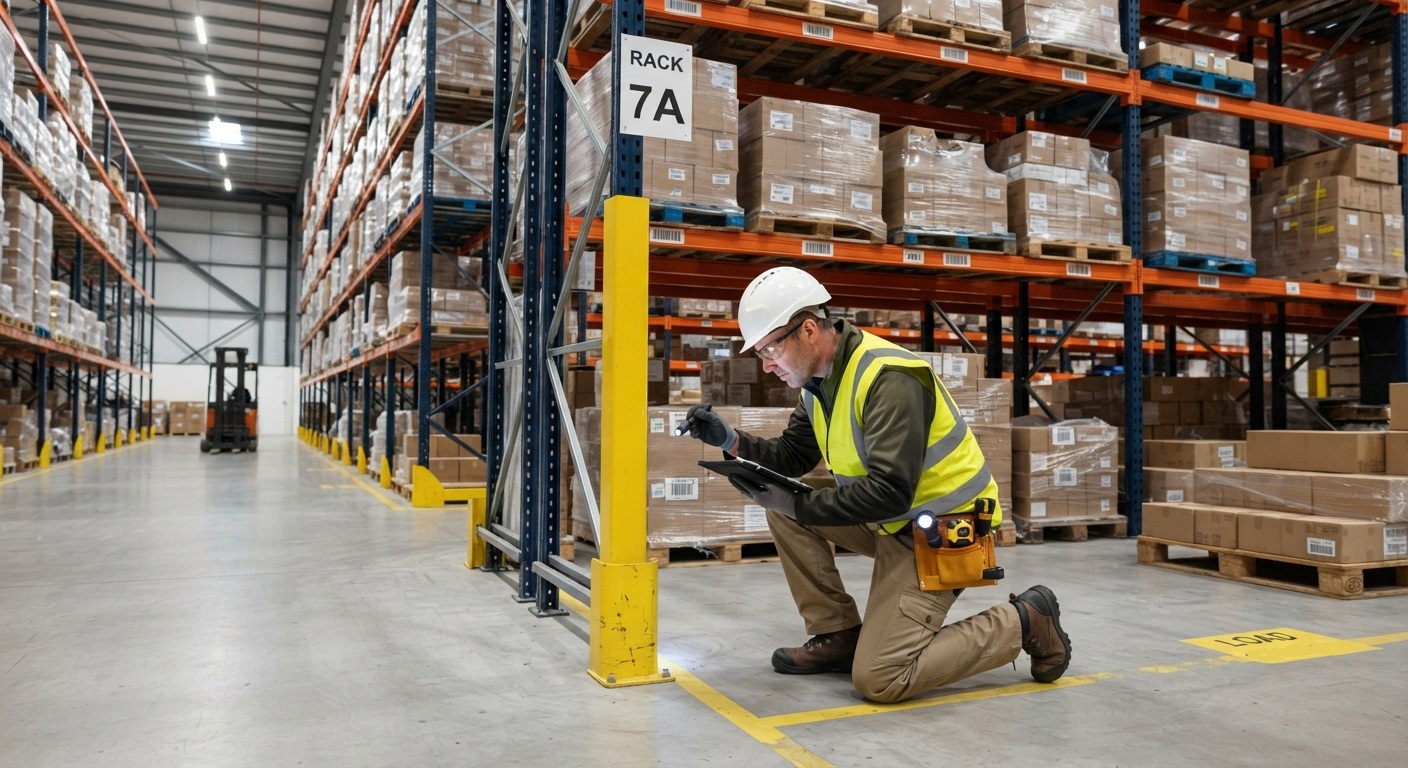
- Crack Monitoring: Hairline cracks must be documented, marked, and monitored. If crack width increases, a professional structural assessment is required.
- Floor Flatness (FF) Testing: In High-Bay warehouses, floor flatness (adherence to F-Number standards) must be periodically inspected to prevent racking instability or uneven loading.
7. Safety Markings & Signage
- Line Marking Maintenance: Routine repainting and maintenance of pedestrian walkways and equipment traffic lanes.
- Hazard Signage: Strategic placement of warning signs in areas with inclines, restricted load zones, or high-traffic intersections.
